
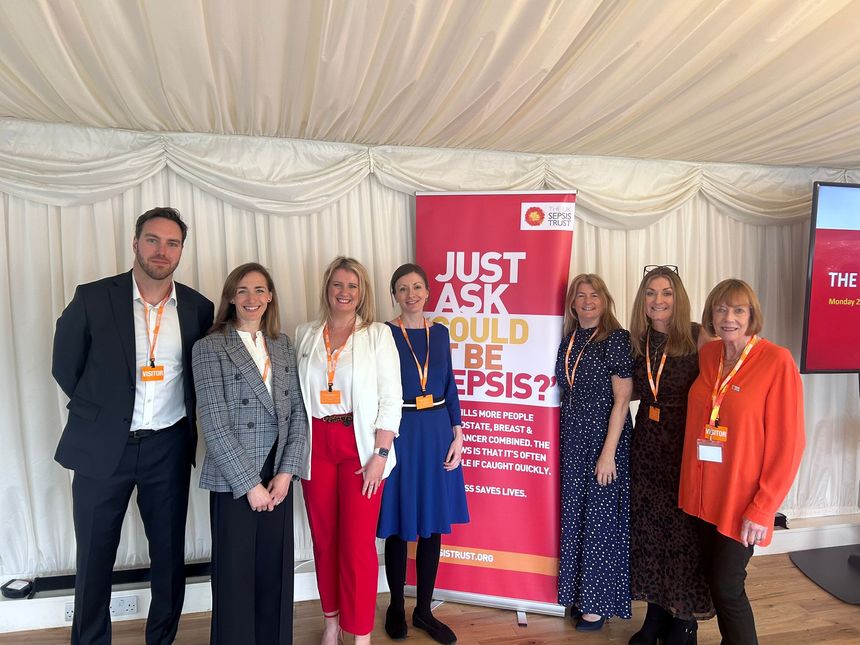

I had the privilege (and excitement!) of attending an event at the House of Commons yesterday, kindly hosted by Lord Mackinlay of Richborough, along with the UK Sepsis Trust, exploring the future of sepsis care in the UK.
As a clinical negligence lawyer at Anthony Collins and as a member of the UK Sepsis Trust’s legal panel, this event was particularly important to me. Much of my work focuses on supporting individuals and families whose lives have been profoundly affected by sepsis in circumstances where opportunities have been missed to provide the right care at the right time, which would have made all the difference to their outcome. It was encouraging to be part of a conversation about how sepsis care will continue to improve over the next decade.
The event brought together a wide range of voices, including representatives from NHS England, the UK Sepsis Trust, parliamentarians including MP Mike Wood, Lord Mackinlay, and individuals who have had sepsis and others who have lost loved ones from sepsis. That combination – charity, clinical, political and personal – reinforced the reality that meaningful progress in sepsis care depends on collaboration across disciplines and sectors, with real human beings at the centre.
Central to the discussion was the forthcoming Modern Services Framework for Sepsis, expected to be published in the coming months. This framework is set to underpin a 10‑year vision for sepsis care. I was particularly pleased to hear speakers talk about a move towards more personalised patient care, recognising that some people are more vulnerable. It was also brilliant to hear speakers talking about empowering people – clinicians, carers and patients. Tragically, some of the cases my team and I encounter are marked by missed warnings raised by patients or relatives, which could have prompted earlier intervention. I came away feeling hopeful that politicians and policy-makers ‘get it’ and there is a genuine commitment to making change happen, which will improve patient outcomes and reduce the occurrences of negligence. While legal accountability remains an important mechanism for learning and redress, prevention must always be the ultimate goal.
My takeaway from yesterday is collaboration – healthcare providers, policymakers, charities, patients and families. The UK Sepsis Trust plays a vital role in bridging these worlds.
Working in clinical negligence law means seeing, first‑hand, the devastating impact sepsis can have when opportunities to diagnose and treat it are missed. Behind every case is a person, a family, and a life altered forever. Attending this event reinforced why continued improvement in sepsis care matters so deeply.
The next decade presents a real opportunity to transform sepsis care in the UK. If the principles discussed at this event are embedded into everyday practice, the impact could be profound.
/Passle/5f4626f28cb62a0ab4152da6/SearchServiceImages/2026-05-01-07-29-05-853-69f456419904c8be9ef4dc68.jpg)
/Passle/5f4626f28cb62a0ab4152da6/MediaLibrary/Images/2026-07-23-12-32-04-980-6a6209c4bf22c590ecaffbcb.png)
/Passle/5f4626f28cb62a0ab4152da6/MediaLibrary/Images/2026-07-31-10-01-54-238-6a6c7292843a1b7d5d758e5c.png)
/Passle/5f4626f28cb62a0ab4152da6/MediaLibrary/Images/2026-06-11-09-57-25-053-6a2a86850214f29faa4bf939.png)