
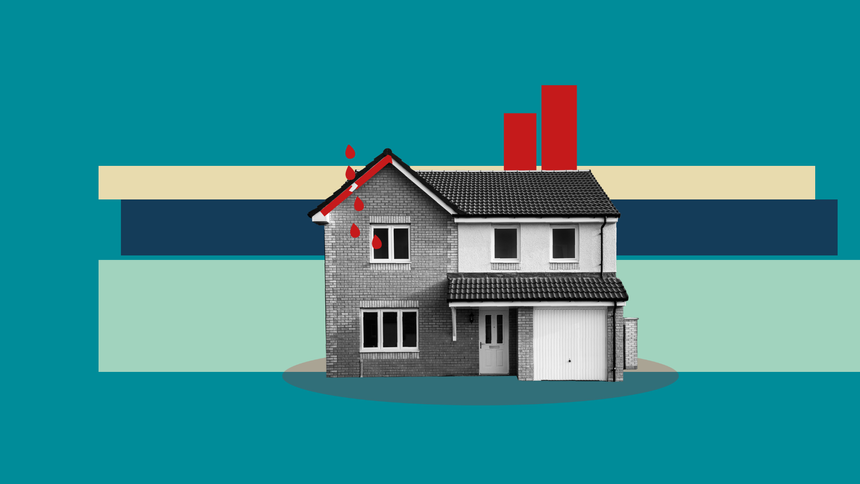

The Housing Ombudsman’s latest Learning from Severe Maladministration report highlights an emerging theme in complaints: the significant impact of unresolved roof leaks on residents’ lives.
For registered providers and local authorities, the message is clear: repairs are no longer simply an asset management issue. They are increasingly being viewed through the lens of resident safety, health risk, accountability, and regulatory compliance.
Key findings
The report highlights cases where residents experienced prolonged disruption due to unresolved roof leaks, including:
- Water ingress affecting bedrooms, kitchens, living rooms and bathrooms.
- A child’s bedroom affected by water running down the wall for two years.
- A resident recovering from chemotherapy being unable to use their bedroom because of persistent leaks.
- Residents regularly emptying buckets during rainfall.
- A case where water damage resulted in a child’s television catching fire.
These examples demonstrate how seemingly routine repairs can quickly escalate into serious health, safety and wellbeing concerns.
What are the early Awaab’s Law lessons?
1. Risk assessments must be dynamic
Landlords failed to adequately assess risks and did not always respond when circumstances changed. Vulnerabilities, health conditions and changes in the condition of the property were sometimes overlooked.
Learning point: Risk assessments should be reviewed throughout the life of a case, particularly where vulnerabilities, children, health conditions or worsening property conditions are identified.
2. Delays need clear justification
The report highlights unexplained delays as a common factor in severe maladministration findings.
Learning point: Where delays are unavoidable, landlords should maintain a clear audit trail explaining the reasons, actions taken to mitigate risk, and how residents have been kept informed.
3. Communication is critical
Poor communication often compounded the impact of repair failures. Residents were left uncertain about timescales, responsibilities and next steps.
Learning point: Regular, proactive updates can significantly reduce resident frustration and demonstrate effective case management.
4. Challenge ‘no access’ assumptions
The Ombudsman identified concerns around unevidenced reports of no access.
Learning point: Landlords should ensure robust evidence exists before closing repairs or attributing delays to access issues, including documented attempts to engage residents.
5. Consider temporary rehousing earlier
The report notes that landlords sometimes failed to consider temporary moves where living conditions had deteriorated significantly.
Learning point: Temporary accommodation should be actively considered where repairs cannot be completed quickly and resident health or safety may be affected.
Implications for RPs and local authorities
With the expansion of Awaab’s Law and the forthcoming Decent Homes Standard, the Ombudsman warns that landlords will be expected to take more immediate and effective action rather than relying on future planned works programmes.
Organisations should be reviewing:
- Repairs triage and escalation processes
- Risk assessment frameworks
- Vulnerability identification and risk assessment processes
- Management of complex repairs and major works, record keeping and evidence trails
- Contractor oversight arrangements
- Governance and oversight of complex repair cases
- Communication standards with residents
- Decant and temporary accommodation decision-making processes/protocols.
Our view
The report reinforces an important shift across the sector: compliance is no longer measured solely by whether a repair is eventually completed, but by how effectively risk is managed throughout the resident journey. For RPs and local authorities, the strongest defence against maladministration findings will be evidence of proactive risk management, clear communication and prompt intervention where residents are living with deteriorating conditions. As Awaab’s Law expands, these capabilities will become essential components of both operational resilience and regulatory assurance.
/Passle/5f4626f28cb62a0ab4152da6/SearchServiceImages/2026-05-01-07-29-05-853-69f456419904c8be9ef4dc68.jpg)
/Passle/5f4626f28cb62a0ab4152da6/MediaLibrary/Images/2026-07-24-14-22-29-025-6a6375253455d4af9f70ebca.png)
/Passle/5f4626f28cb62a0ab4152da6/MediaLibrary/Images/2026-07-23-12-32-04-980-6a6209c4bf22c590ecaffbcb.png)
/Passle/5f4626f28cb62a0ab4152da6/MediaLibrary/Images/2026-07-31-10-01-54-238-6a6c7292843a1b7d5d758e5c.png)